
 Cultural Partners / Stift Wilten

Virtual Tours
Watch for free, in the browser, without registration.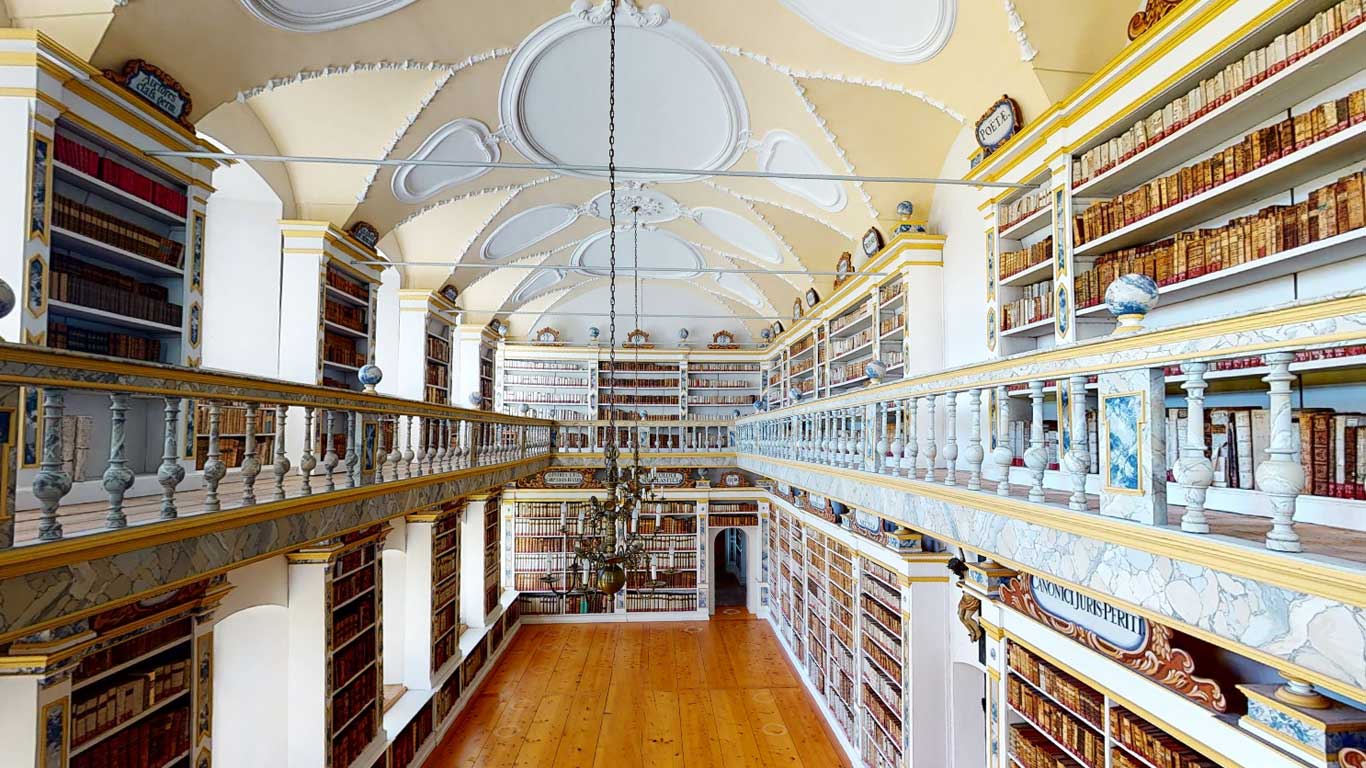
The Wilten Abbey Experience
The eventful history of Stift Wilten dates back to the late antiquity. The monastery stands on the site of the Roman fortress Veldidena. It is located at the foot of the Bergisel, nestled in the landscape of Tyrol. Around the year 1128, the first Premonstratensians finally settled in the monastery.
For almost 900 years, the monastery has been a place of history, art, and spirituality. It is not only a place of ancient art treasures, but above all a place of lived faith.
The library of Stift Wilten
A monastery library is attested for the earliest period of the monastery. Pope Innocent II confirmed the Premonstratensian monastery as early as 1138. Furthermore, a deed of donation from 1140 includes not only liturgical equipment but also books. However, their authenticity has not been confirmed.
Some manuscripts and numerous incunabula from the 14th and 15th centuries still exist. In addition, there are records of book donations and the names of some scribes from the Wiltener scriptorium. Today, the library serves as a scientific library and a study library. Its collections include Tirolensia, Wiltinensia, Prämonstratensia, Theology, Art and History.
Stift Wilten is the oldest monastery in Tyrol. As early as the year 1000, a monastic settlement already existed in this place. According to legend, the giant Haymon founded this community.
The Museum and the Dragon's Tongue
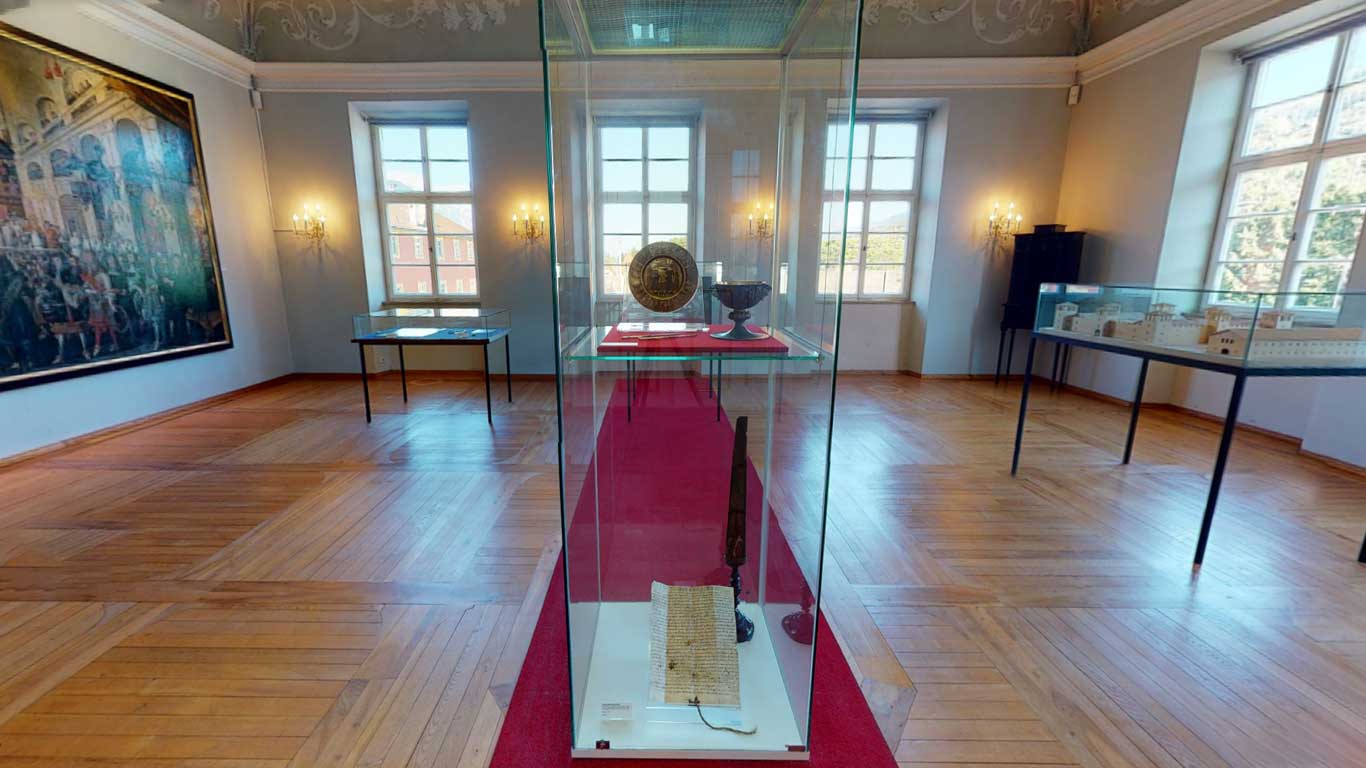
The museum’s collection showcases a wide range of everyday objects. From Gothic altar panels to snuff boxes and Roman razors, there is something for everyone. The legendary dragon tongue is also famous. It is said to be the tongue of the dragon that the giant Haymon killed. A copper engraving by Johann Jakob Jezl from 1677 therefore shows Haymon with the tongue over his shoulder.
The oldest view of Stift Wilten
A Gothic panel painting of the former Ursula altar shows a late medieval view of the church and monastery. The three-aisled pillar basilica therefore probably already had the same dimensions in Romanesque times. Under Abbot Wernher, whom one venerates as a saint, the church was rebuilt in the early Gothic style around 1300.


